00:00
| Prefix | Symbol | Multiplier | Decimal |
|---|---|---|---|
| tera | T | 1012 | 1,000,000,000,000 |
| giga | G | 109 | 1,000,000,000 |
| mega | M | 106 | 1,000,000 |
| kilo | k | 103 | 1,000 |
| centi | c | 10−2 | 0.01 |
| milli | m | 10−3 | 0.001 |
| micro | µ | 10−6 | 0.000001 |
| nano | n | 10−9 | 0.000000001 |
Energy is the ability to do work. Whenever something happens anywhere in the universe, energy is transferred.
Energy is stored in objects. The main energy stores are: gravitational, kinetic, elastic, thermal, chemical, nuclear, electrostatic and magnetic.
Energy cannot be created or destroyed — it is only transferred between stores. This is the Law of Conservation of Energy.
The unit of energy is the Joule (J).
Gravitational potential energy (GPE) is stored when an object with mass is raised in a gravitational field.
Ep = gravitational potential energy store (J); m = mass (kg); g = gravitational field strength (N/kg); h = height above the ground (m).
On Earth, g = 9.8 N/kg. GPE increases if mass, height, or g increases.
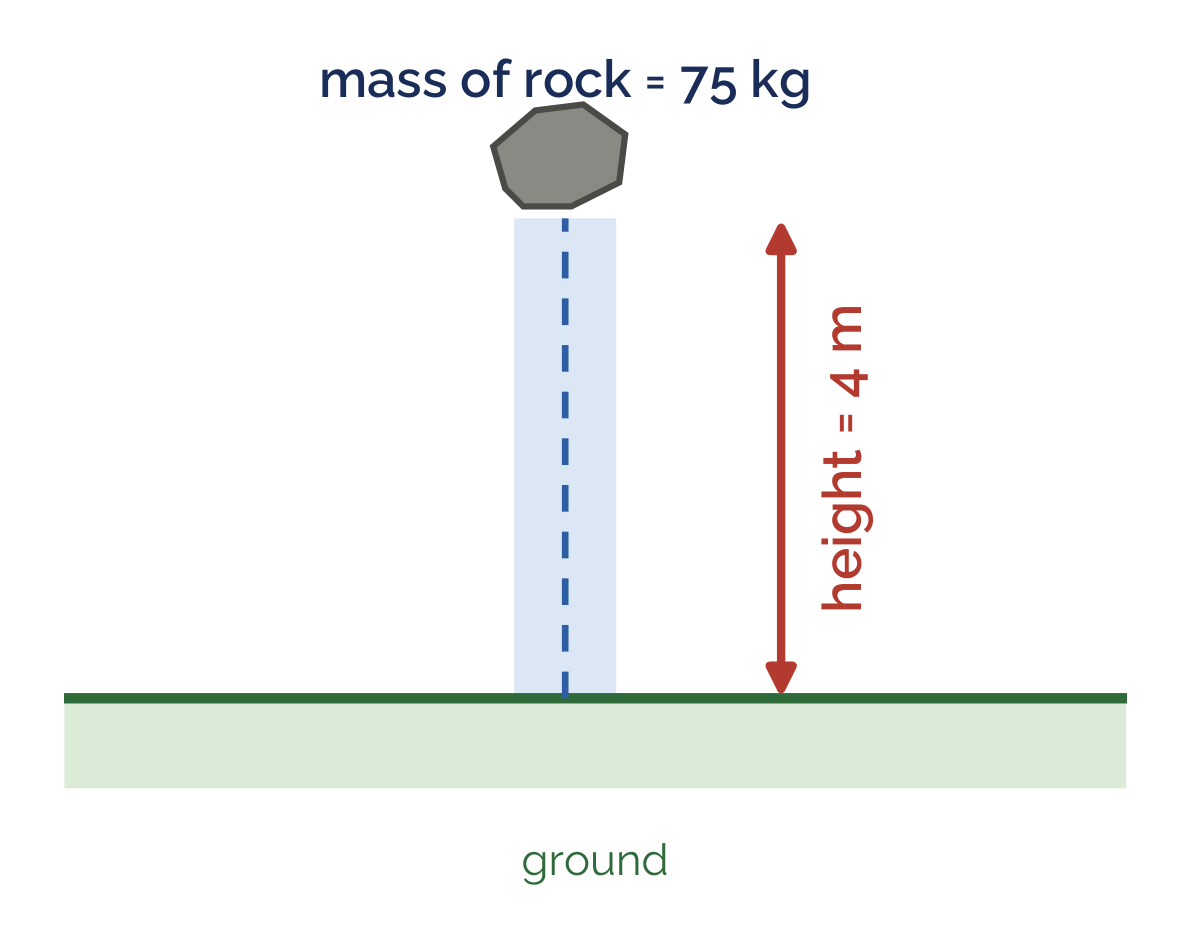
A rock of mass 75 kg is lifted 4 m. g = 9.8 N/kg. Calculate its gravitational potential energy.
Ep = mgh can also be used to find m or h, if the other values are known.
Always start from the original equation. Substitute the known values in, then multiply any known numbers together on the same line before rearranging — this avoids fractions with more than one term on the bottom.
A buzzard stores 5403 J of GPE at a height of 98 m.
A ball has a GPE of 196 J and a mass of 2 kg.
Kinetic energy (KE) is the energy stored in a moving object.
Ek = kinetic energy store (J); m = mass (kg); v = speed (m/s).
Speed (not velocity) is used, because kinetic energy is a scalar quantity — it does not depend on direction.
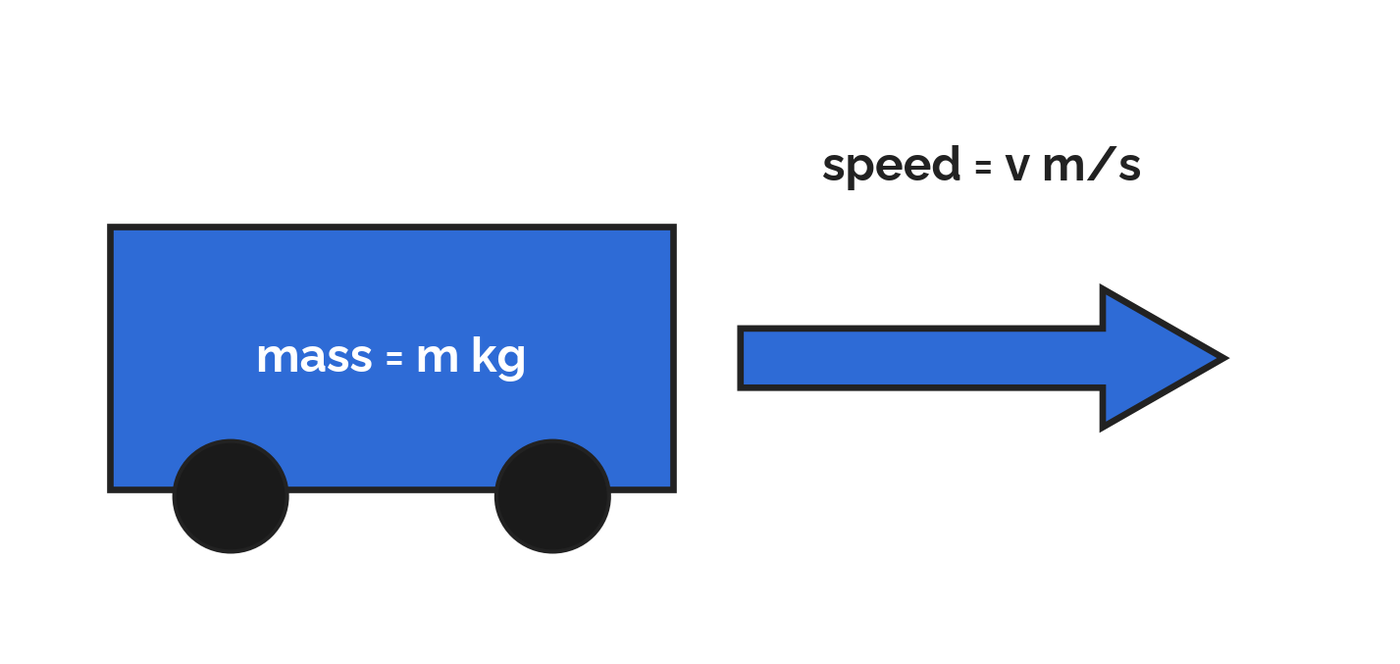
An object of mass 4 kg moves at a speed of 3 m/s. Calculate its kinetic energy.
Ek = ½mv² can also be used to find m or v, if the other values are known.
Always start from the original equation. Substitute the known values in, then multiply any known numbers together on the same line before rearranging — this avoids fractions with more than one term on the bottom.
A lorry moving at 30 mph has more KE than a car at the same speed because its mass is larger — KE ∝ m.
KE increases with the square of speed — doubling speed quadruples KE.
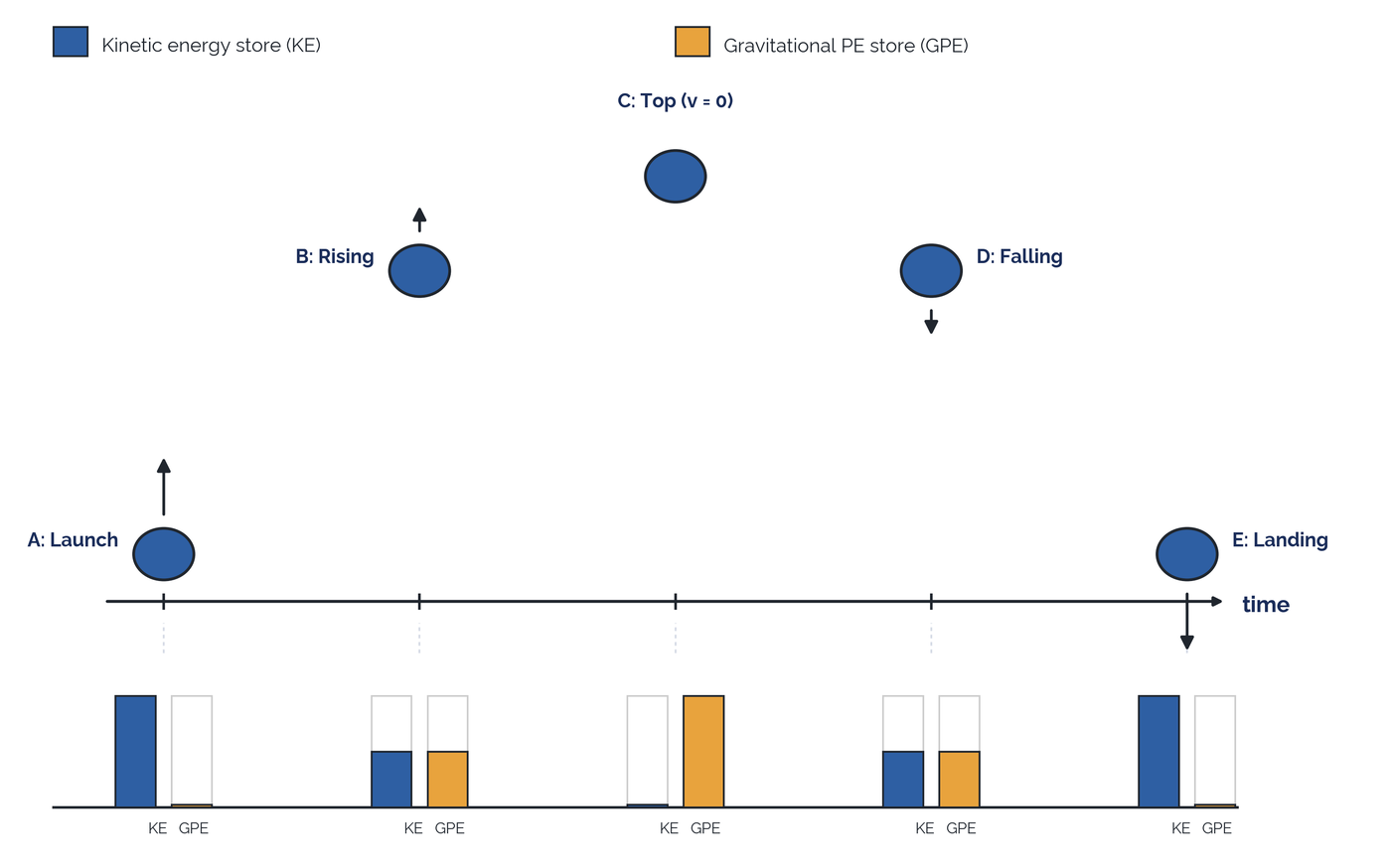
KE and GPE are linked by conservation of energy. When an object falls, GPE converts to KE (ignoring air resistance).
If a 3 kg ball falls from 5 m: GPE lost = mgh = 3 × 9.8 × 5 = 147 J = KE gained.
The maximum KE at the bottom equals the GPE at the top (in a closed system).
In a closed system, the total energy remains constant. Energy is transferred between stores but the total never changes.
Example: A ball thrown upward — KE converts to GPE as it rises; GPE converts back to KE as it falls.
In reality, no system is perfectly closed. Some energy is always transferred to the surroundings as thermal energy.
When a ball hits the ground, KE is transferred to sound and thermal energy stores — both are dissipated.
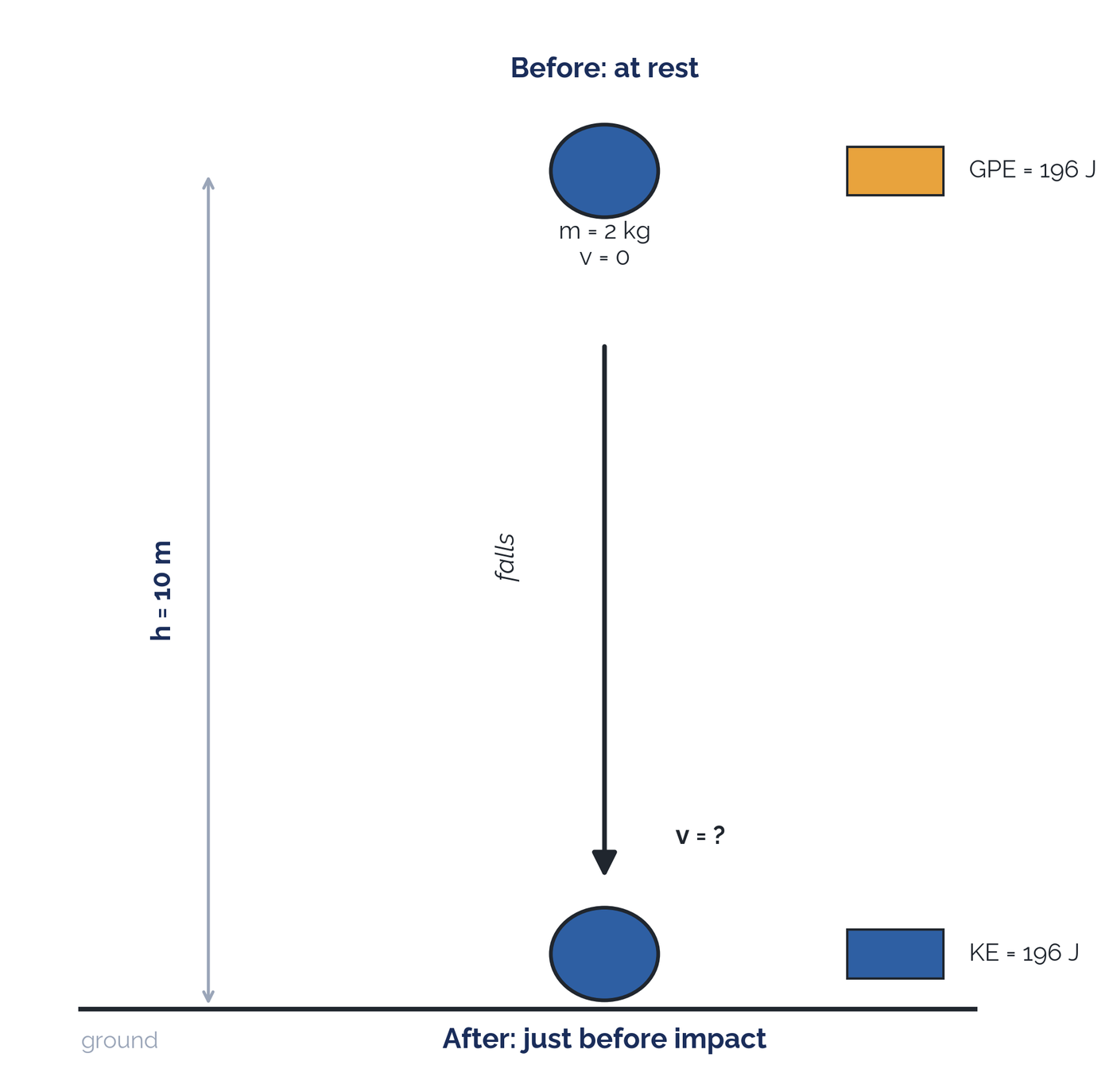
A 2 kg ball is dropped from a height of 10 m. g = 9.8 N/kg. Find its speed just before it hits the ground.
Dissipation is when energy is transferred to the surroundings in a less useful form, usually thermal or sound.
Dissipated energy is “wasted” — it spreads into the surroundings and cannot be recovered easily.
Examples: friction in a car engine (thermal), air resistance on a cyclist (thermal), sound from brakes.
Reducing dissipation: lubrication reduces friction; streamlining reduces air resistance; insulation reduces thermal loss.
When describing energy transfers, state the initial store → mechanism of transfer → final store(s).
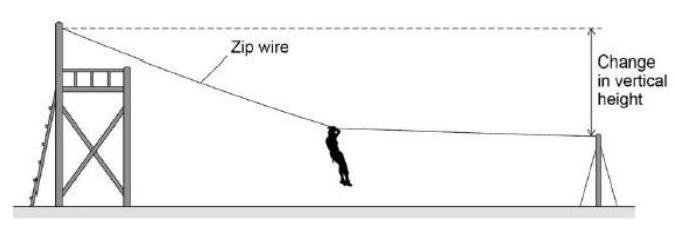
Zip wire: GPE → (mechanically) → KE + thermal (friction).
Bouncing ball: GPE → KE (falling) → elastic PE (squash) → KE + thermal + sound (bounce).
The total energy at the end equals the total at the start; only the distribution changes.
Elastic potential energy (EPE) is stored when an elastic object (e.g. a spring) is stretched or compressed.
Ee = elastic potential energy (J); k = spring constant (N/m); e = extension (m).
The extension is the extra length stretched — not the total length.
The spring constant k measures the stiffness of the spring. A higher k means a stiffer spring.
This formula is on the AQA formula sheet — you do not need to memorise it.
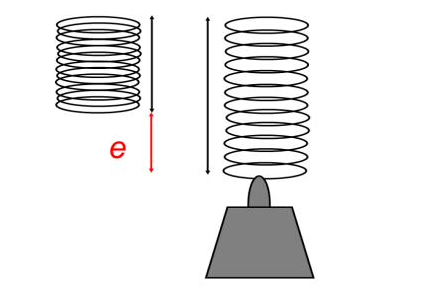
A spring (k = 8 N/m) is stretched 3 m. Calculate its elastic potential energy.
Ee = ½ke² can also be used to find k or e, if the other values are known.
Always start from the original equation. Substitute the known values in, then multiply any known numbers together on the same line before rearranging — this avoids fractions with more than one term on the bottom.
When a spring is released, elastic PE converts to KE (and some thermal).
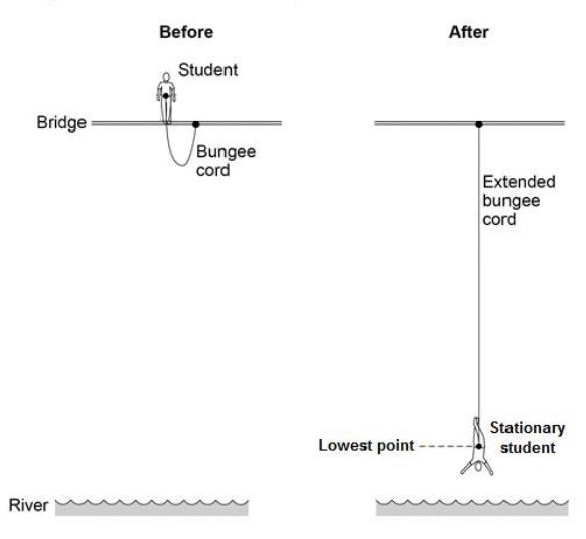
A bungee cord stores elastic PE when stretched; when it pulls the jumper back, EPE converts to KE then GPE.
Elastic PE ↔ KE conversions occur in trampolines, bows, catapults and musical instruments.
A spring (k = 50 N/m) is stretched 0.4 m and used to fire a 0.5 kg ball. Find the energy stored, then the speed.
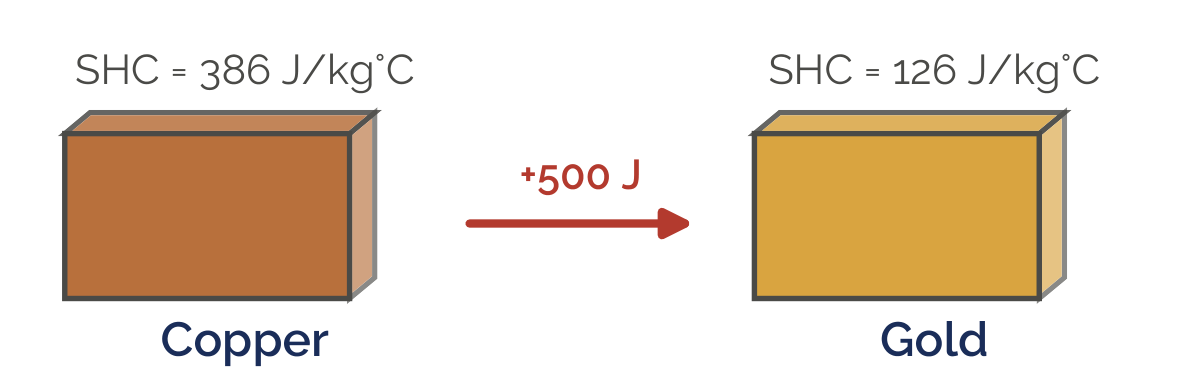
Putting the same energy into different materials gives different temperature rises. This is described by specific heat capacity.
The specific heat capacity (c) is the energy needed to raise the temperature of 1 kg of a substance by 1°C.
A material with a high specific heat capacity needs more energy to heat up (e.g. water, c = 4200 J/kg°C).
The energy needed to change the temperature of a substance is:
change in thermal energy = mass × specific heat capacity × temperature change
ΔE = change in thermal energy (J); m = mass (kg); c = specific heat capacity (J/kg°C); ΔT = temperature change (°C).
This equation is on the AQA formula sheet.
Heat 2 kg of water (c = 4200 J/kg°C) by 30°C. Find the energy transferred.
ΔE = mcΔT can also be used to find m or c, if the other values are known.
Always start from the original equation. Substitute the known values in, then multiply any known numbers together on the same line before rearranging — this avoids fractions with more than one term on the bottom.
126 000 J heats 1 kg of water (c = 4200 J/kg°C). Find the temperature change.
Required practical: determine the specific heat capacity of a material by transferring a known amount of energy to it and measuring its temperature change.
A block with a mass of exactly 1 kg is normally used — this simplifies the calculation, since m = 1 kg makes c easy to find directly from the results.
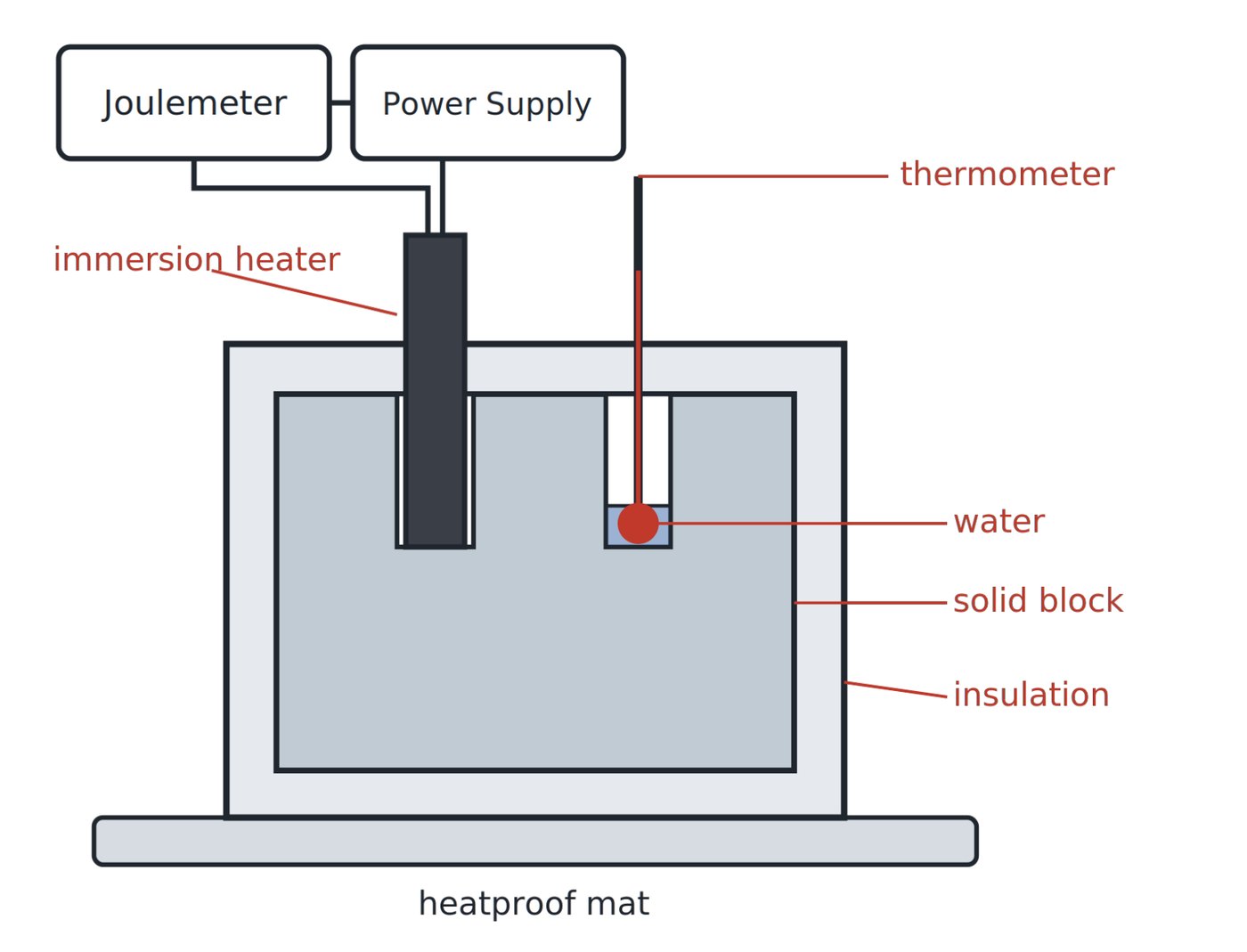
A 1 kg block of the material, with two holes — one for a heater, one for a thermometer.
Electric heater, power supply and joulemeter (a voltmeter and ammeter are sometimes used instead, but require the total energy to be calculated separately).
Thermometer, pipette, insulation, stopwatch, balance, heatproof mat.
Set up the equipment as shown in Fig 6.1: wrap the block in insulation and place it on a heatproof mat. Fit the heater snugly into one hole, and the thermometer (with a drop of water) into the other, then connect the heater to a joulemeter and power supply.
Measure and record the mass of the block on the balance.
Record the starting temperature of the block.
Switch on the power supply and start the stopwatch at the same time.
Record the temperature of the block and the energy used at regular time intervals (e.g. every 30 s). Switch off the heater once you have enough readings (after 10 minutes, or once the block reaches 50°C).
Safety: the block and heater get hot — do not touch them during or straight after heating, and clean up any water spills near the power supply immediately.
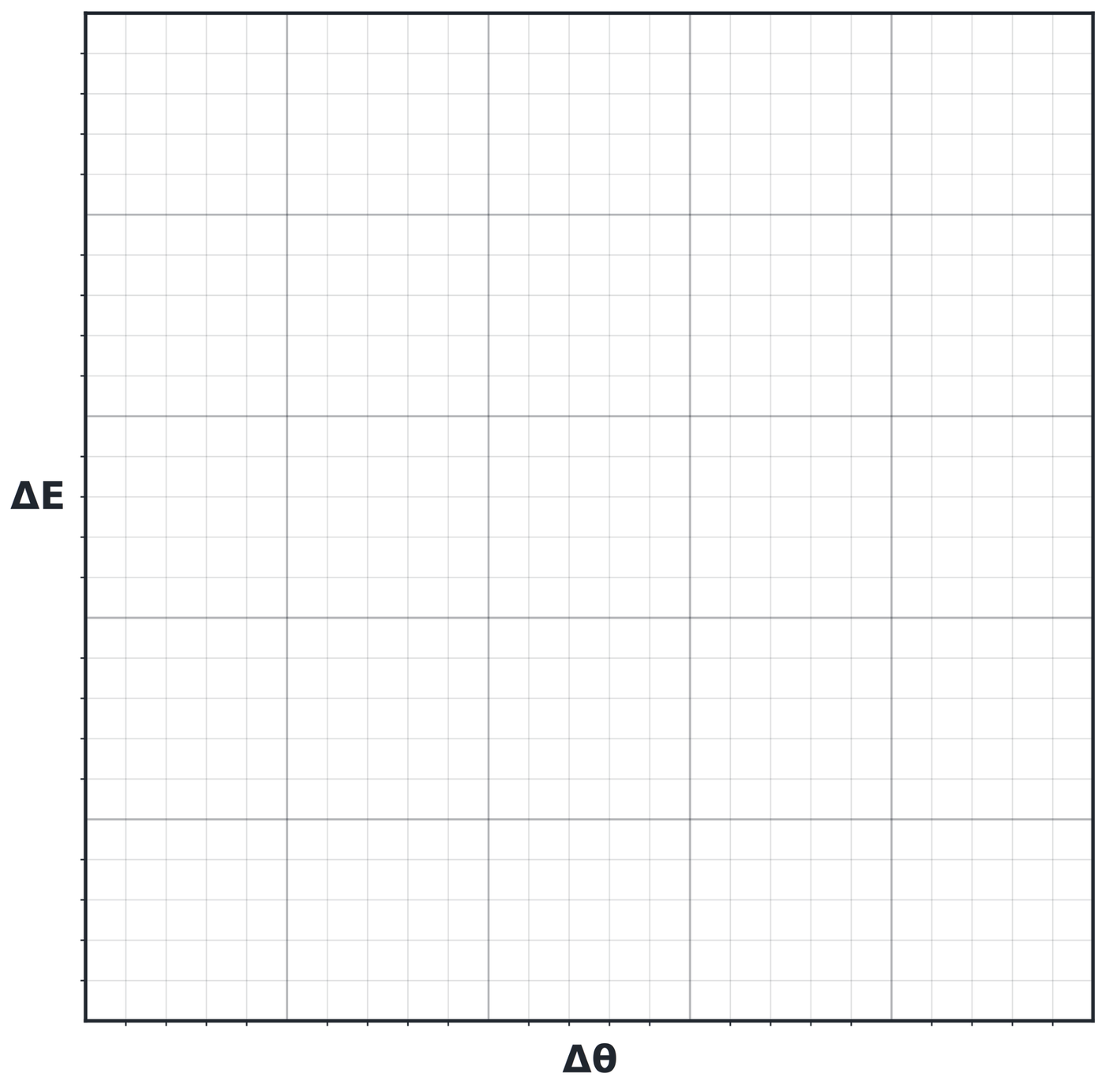
Normally we plot the independent variable (the thing we change) on the x-axis and the dependent variable (the thing we measure) on the y-axis.
However, this time is an exception, to make our analysis easier — we are going to plot ΔE on the y-axis and ΔT on the x-axis.
This is because the equation of a straight line is:
and our equation has the same form:
Because our block has a mass of m = 1 kg, making y = ΔE and x = ΔT leaves the gradient equal to c:
The graph often curves at the start — some energy heats the heater itself before the block responds. Use only the straight-line part to find the gradient.
Energy is still lost to the surroundings even with insulation, and there is a time lag between energy being supplied and the temperature rising — both make the measured c less accurate.
Accepted values for some metals commonly used in this experiment:
| Metal | Aluminium | Copper | Iron | Lead | Zinc |
|---|---|---|---|---|---|
| Specific heat capacity (J/kg°C) | 900 | 385 | 450 | 128 | 387 |
Work done is energy transferred.
Rate means how much each second.
Power is the rate at which energy is transferred.
The Watt (W) is the unit of power.
P = power (W); E = energy transferred (J); t = time (s).
Example 1: a device transfers 600 J of energy in 12 s. Calculate its power.
1 Watt means 1 Joule per second. · 1 kJ = 1000 J · 1 min = 60 s
Example 2: a machine transfers 1.2 kJ in 2 minutes. Calculate its power.
Example 3 (finding energy): a device rated 250 W runs for 2 minutes. Calculate the energy transferred.
Example 4 (finding time): a 500 W device transfers 15 000 J. Calculate the time taken.
A motor lifts a 50 kg rock through a height of 4 m in 8 s. g = 9.8 N/kg. Calculate the power of the motor.
The four main stores studied so far: Gravitational (E = mgh), Kinetic (E = ½mv²), Elastic (E = ½ke²), Thermal (E = mcΔT).
Other stores: Chemical (food, fuel, batteries), Nuclear (uranium), Electrostatic (charged objects), Magnetic (magnets).
Energy is transferred when something happens. Transfers can be shown as bar models or Sankey diagrams.
In a bar model, the total height of bars stays constant (conservation) while the energy distributes between stores.
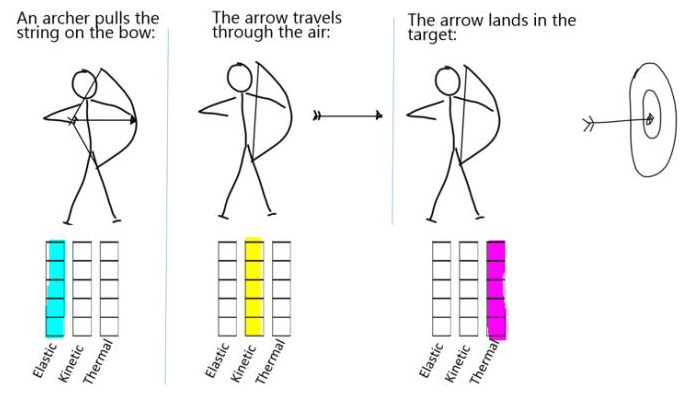
Energy is transferred between stores by: Mechanical working (forces), Electrical working (current), Heating (conduction/convection/radiation), Radiation (light, sound, etc.).
The rate of energy transfer is power (Watts).
Example — electric motor: electrical → (electrical working) → kinetic + thermal.
Example — burning fuel: chemical → (heating) → thermal + (radiation) → light.
A Sankey diagram shows energy transfers with arrow widths proportional to energy values.
Useful energy goes forwards (horizontal); wasted energy goes downward (usually thermal).
For a car engine: 1000 J input → 250 J kinetic (forward) + 750 J thermal (down).
Efficiency can be read from a Sankey diagram:
Thermal insulation reduces the rate of energy transfer to the surroundings.
Methods: cavity wall insulation, loft insulation (foil or foam), double glazing, draught excluders.
Best insulating materials have low thermal conductivity (e.g. foam, wool, air gaps).
High thermal conductivity = faster energy transfer. Low thermal conductivity = slower transfer.
Metal has high thermal conductivity; foam has low thermal conductivity.
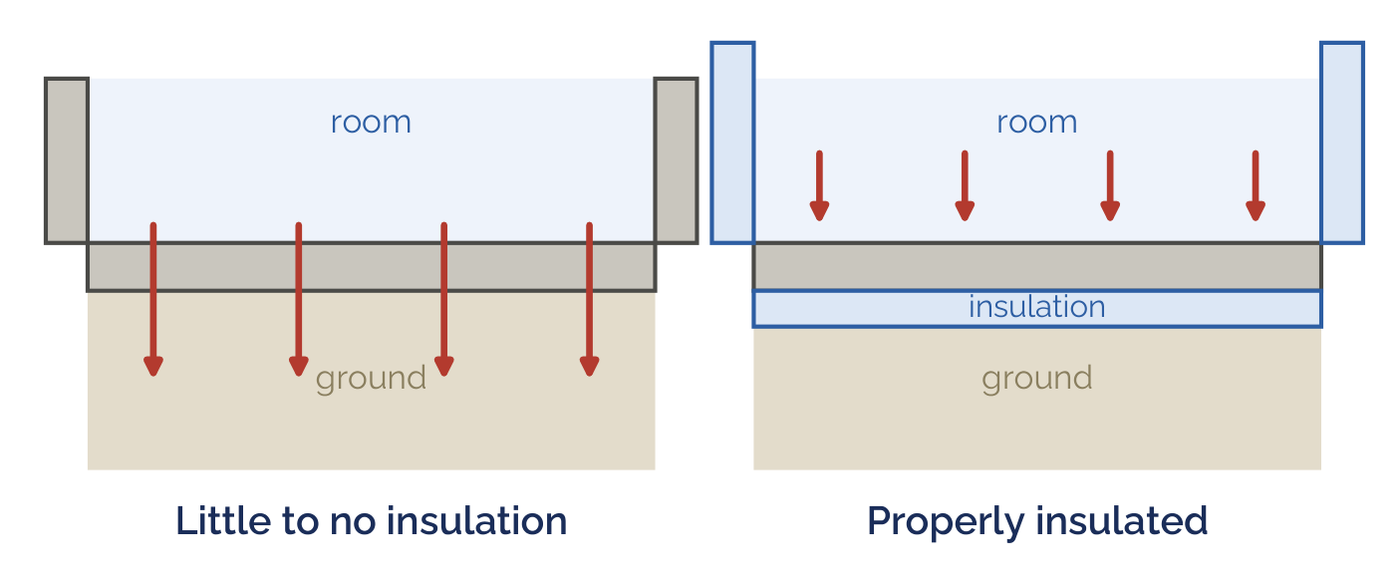
Lubrication (oil/grease) reduces friction between moving surfaces, reducing thermal energy waste.
Streamlining reduces air resistance, reducing thermal energy wasted in vehicles.
Insulation around pipes and tanks reduces thermal energy loss by conduction.
In electrical devices, thicker wires reduce resistance and therefore reduce heating losses.
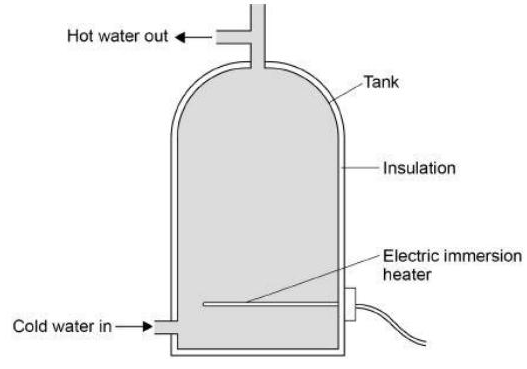
A copper hot water tank loses energy quickly because copper has high thermal conductivity.
Insulation (foam jacket) around the tank reduces the rate of energy transfer to the room.
An insulated tank keeps water hot for longer, reducing the need to reheat it.
The electric immersion heater inside the tank converts electrical energy to thermal energy.
Efficiency is the fraction of input energy that is transferred to a useful output.
Efficiency has no units. It is between 0 and 1 (or expressed as a percentage 0–100%).
No machine is 100% efficient — some energy is always dissipated as thermal or sound.
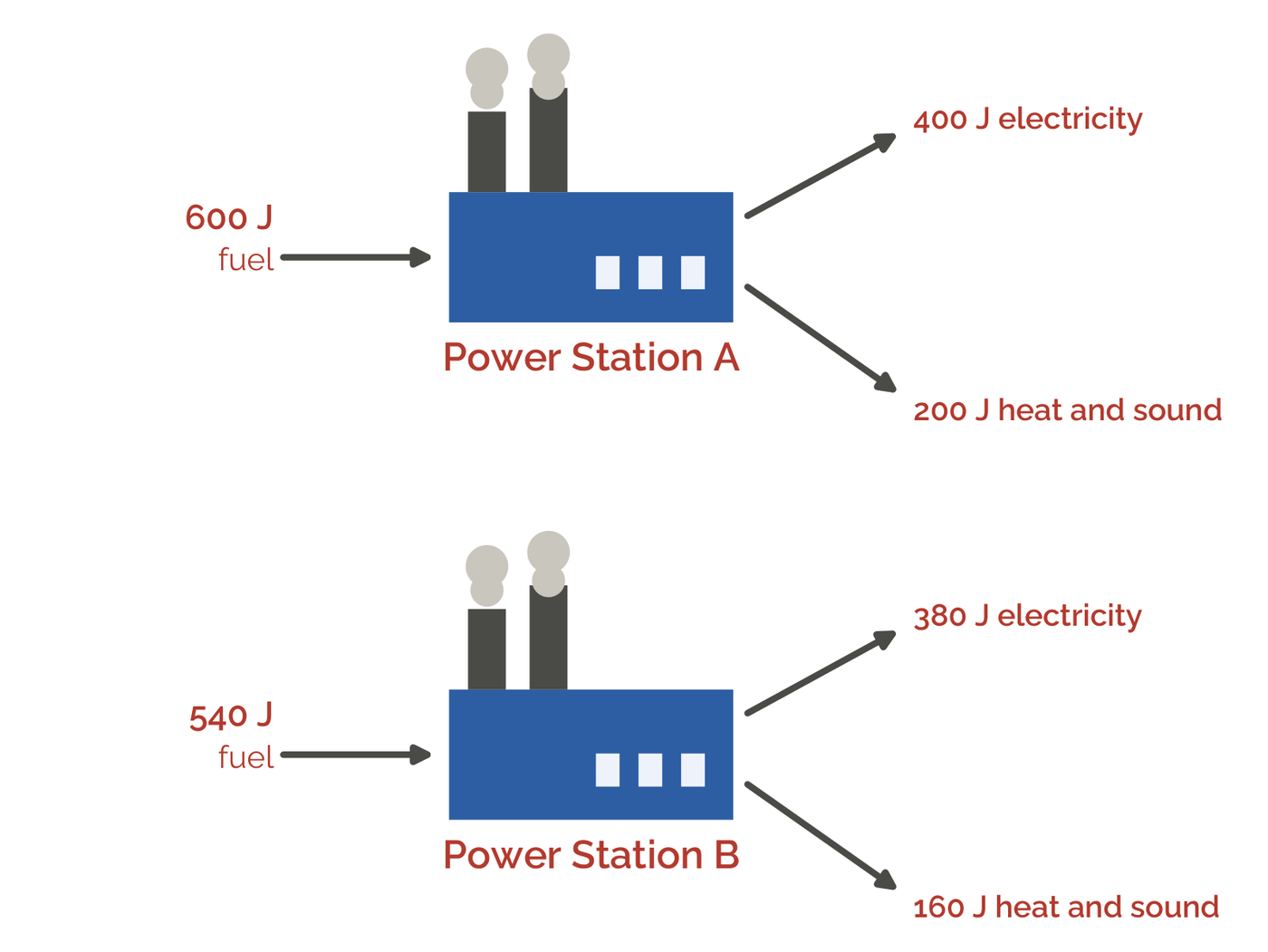
Example: A lightbulb uses 470 J, emits 180 J as heat and 290 J as light.
To find wasted energy: wasted = input − useful output.
Increasing efficiency: lubrication, streamlining, better insulation, using waste heat (CHP).
CHP (Combined Heat and Power) stations recapture waste steam to heat homes, greatly increasing overall efficiency.
To express as percentage: multiply the decimal by 100 (e.g. 0.67 → 67%).
Wasted energy is usually thermal. Reducing thermal losses increases efficiency.
Environmental argument: more efficient appliances use less fuel → lower CO2 emissions.
Economic argument: more efficient appliances cost less to run.
Fossil fuels (coal, oil, natural gas) formed from ancient organisms over millions of years. They are non-renewable.
Fossil fuels store chemical energy. When burned, chemical energy → thermal → electrical (via turbine/generator).
Advantages: reliable, high energy density, existing infrastructure.
Disadvantages: non-renewable (will run out ~50 years); produce CO2 (greenhouse gas/climate change); coal also produces SO2 (acid rain).
They provide a consistent, controllable supply — useful for meeting peak demand.
Nuclear fuels (uranium, plutonium) are non-renewable but will last ~80 years.
Nuclear fission: heavy nucleus absorbs a neutron and splits, releasing large amounts of energy as heat.
Advantages: no CO2 emissions during operation; very high energy density; reliable.
Disadvantages: expensive to build; produces radioactive waste (difficult to dispose of safely); risk of contamination if accident occurs.
Scientists research nuclear fusion (joining light nuclei) which would be cleaner but is not yet commercially viable.
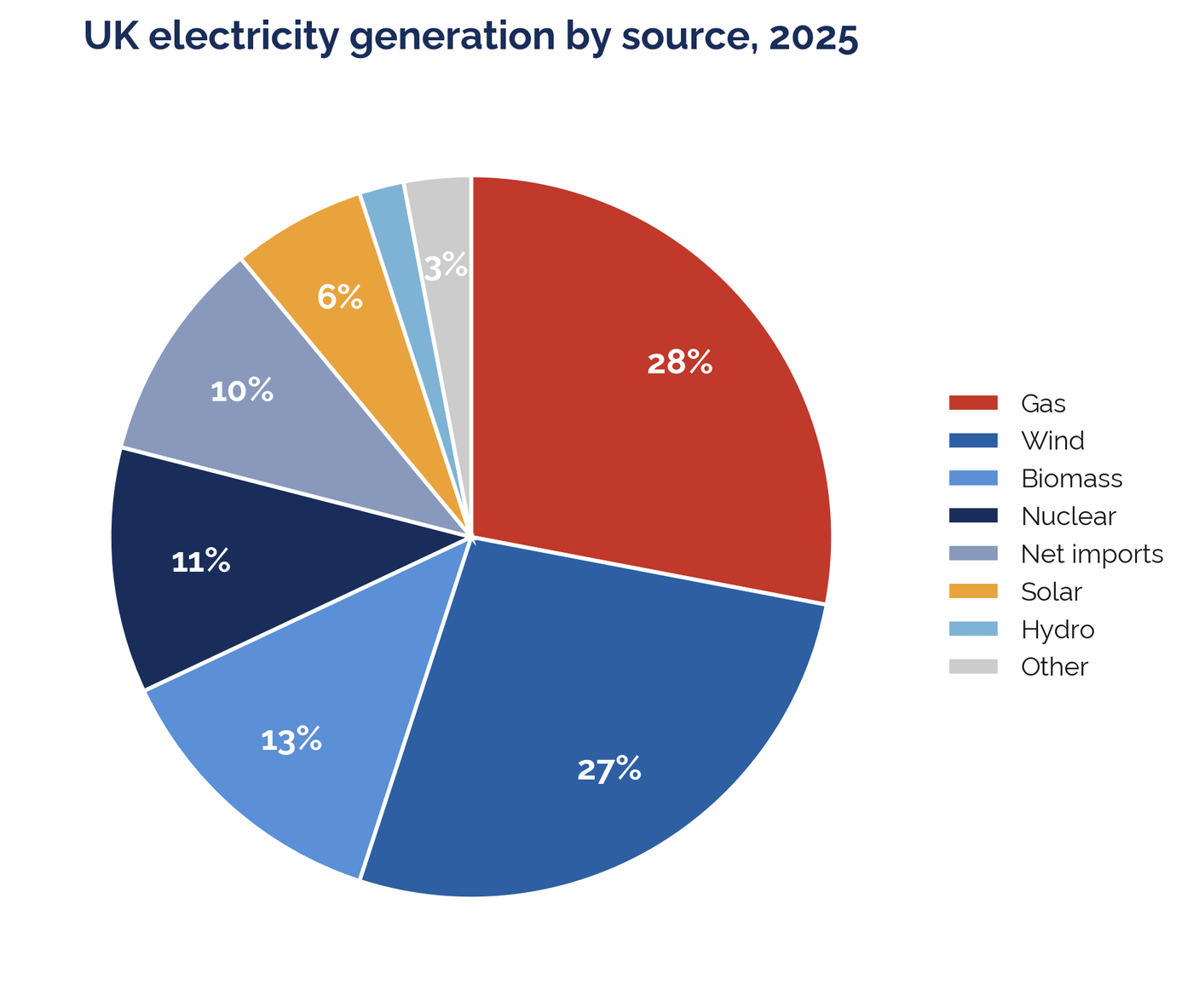
The UK uses a mix of energy resources. Gas and wind together now provide the majority of UK electricity, with nuclear, biomass, solar and imports making up the rest.
The UK stopped using coal-fired power stations entirely in 2024, to reduce CO2 emissions.
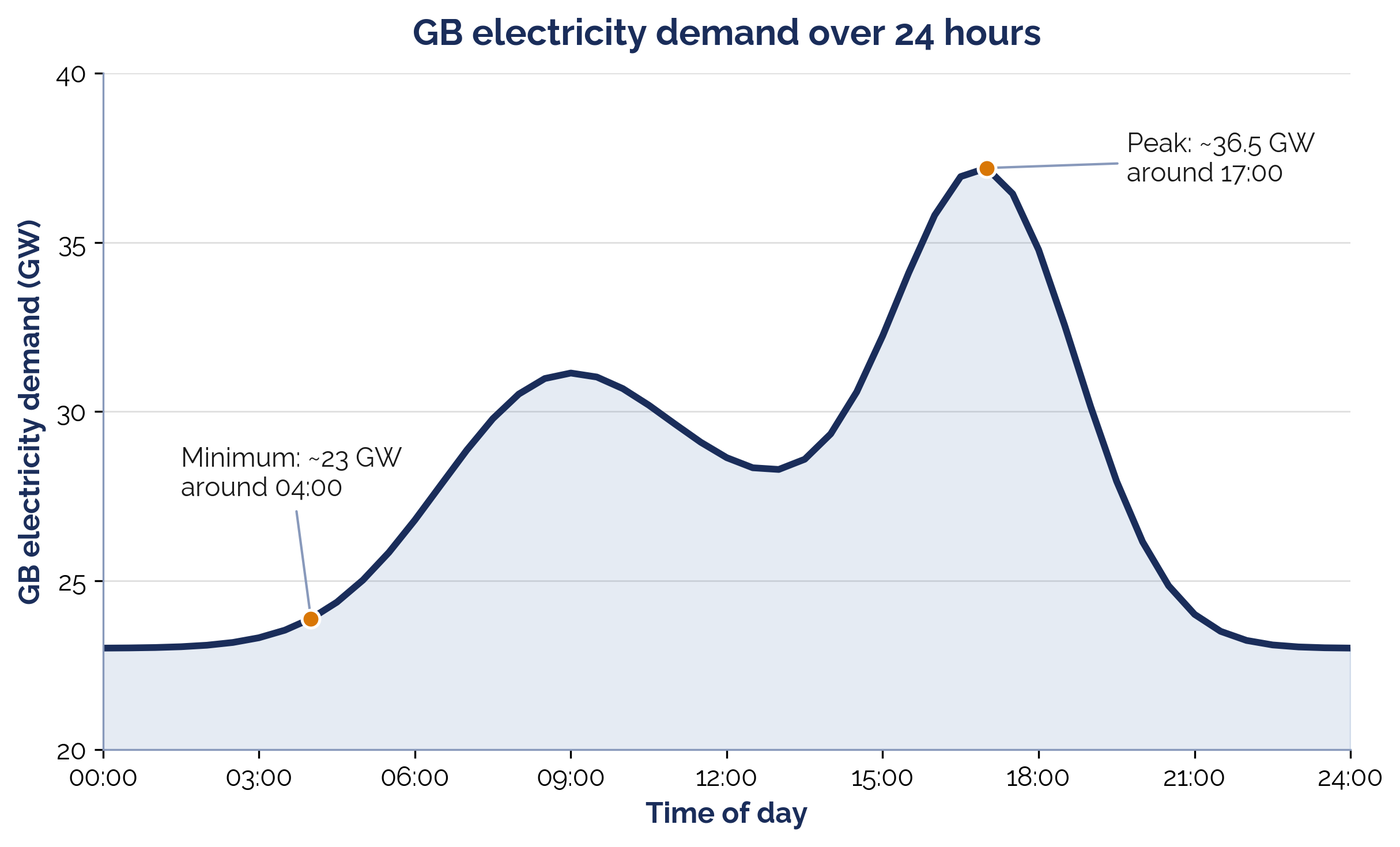
Electricity demand varies throughout the day — non-renewables are used to meet peak demand because they are controllable.
Renewables are increasingly replacing non-renewables as technology improves and costs fall.
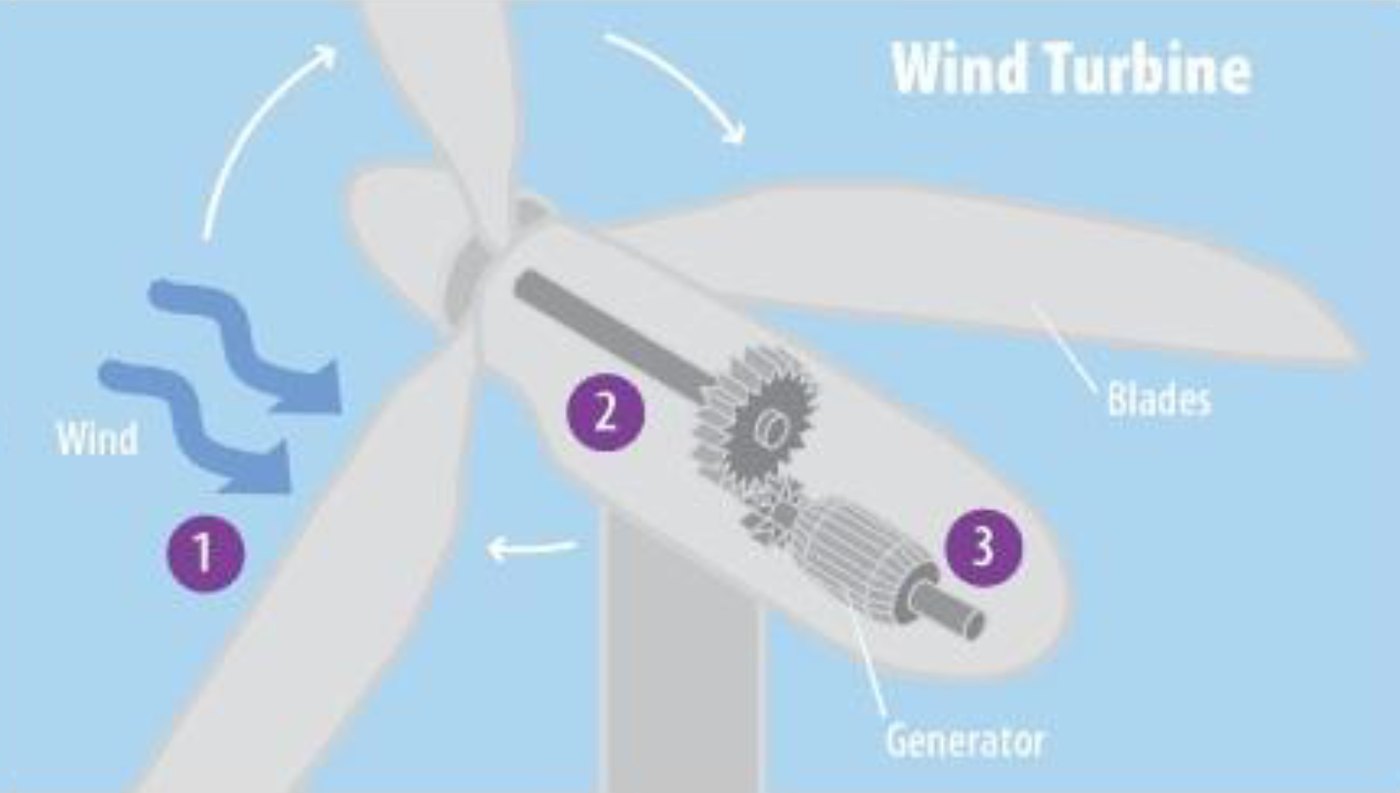
Wind power: Wind turns turbine blades → generator → electricity. Zero emissions, renewable. Disadvantage: intermittent; visual impact; harms birds.
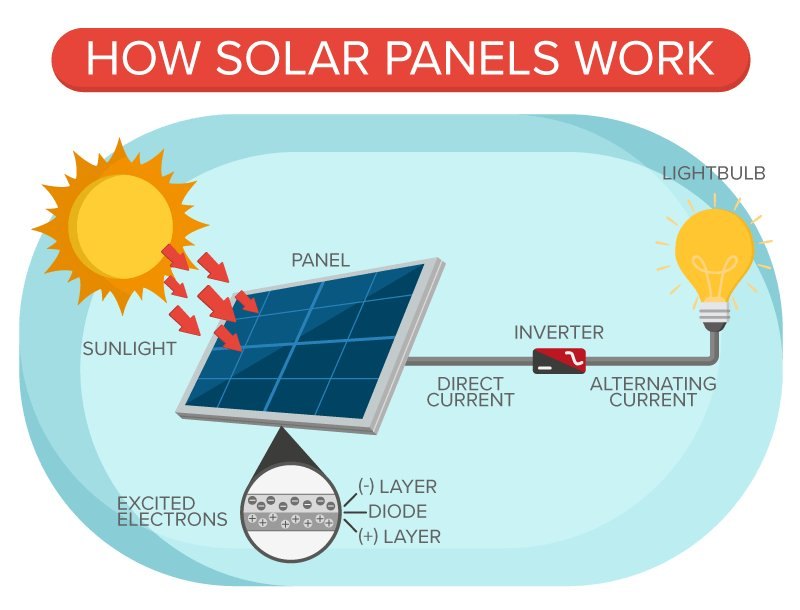
Solar power: Photovoltaic cells convert sunlight to electricity. Renewable, no emissions. Disadvantage: no output at night or in cloudy weather; requires large area.
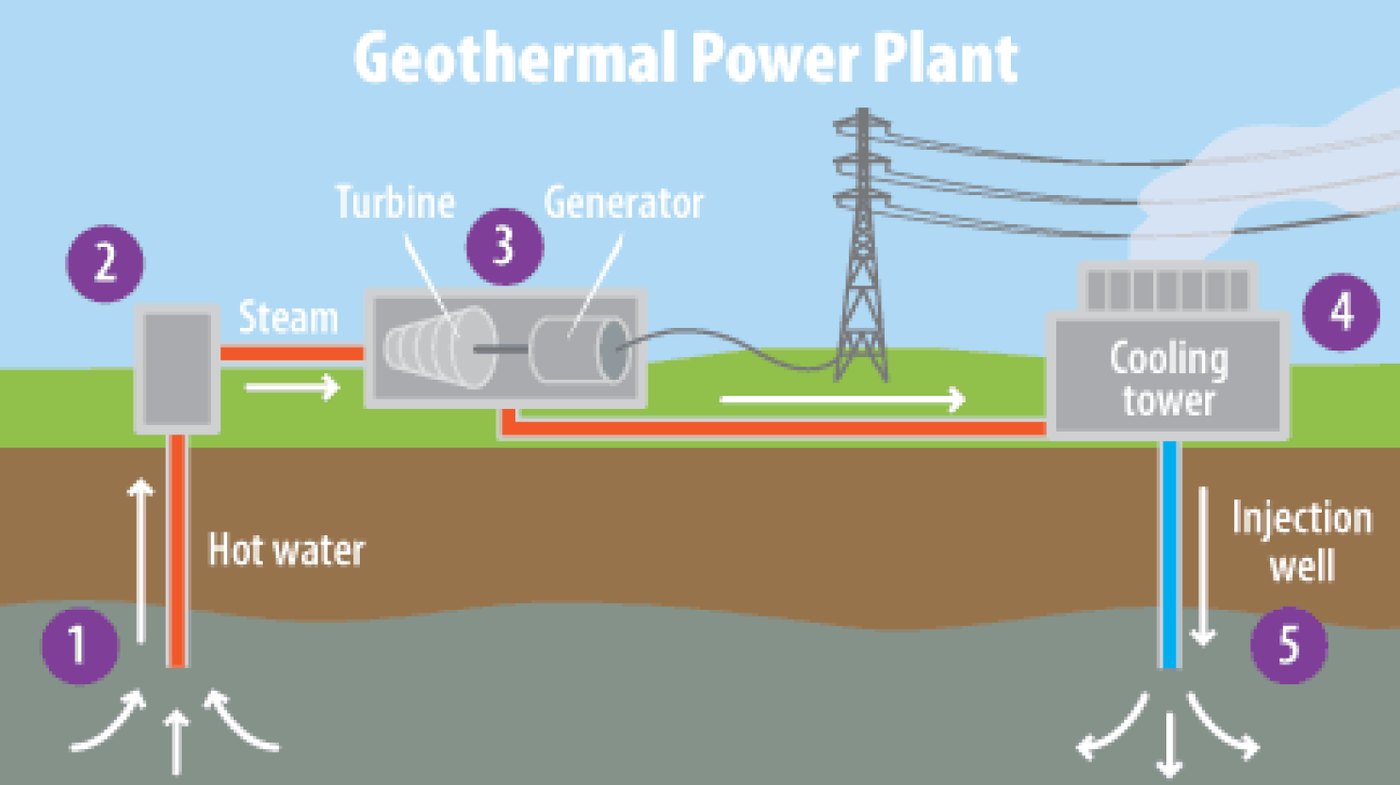
Geothermal: Water pumped into hot rocks underground, returns as steam → drives turbine. Renewable, no emissions. Disadvantage: only available in geologically active areas.
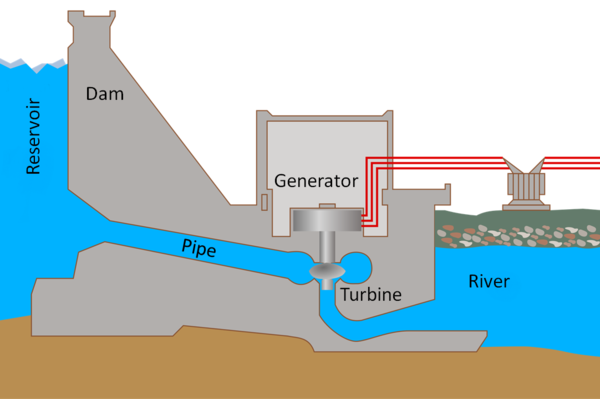
Hydroelectric: Water in reservoir flows through turbines. Renewable, zero emissions, reliable. Disadvantage: habitat destruction; needs suitable geography.
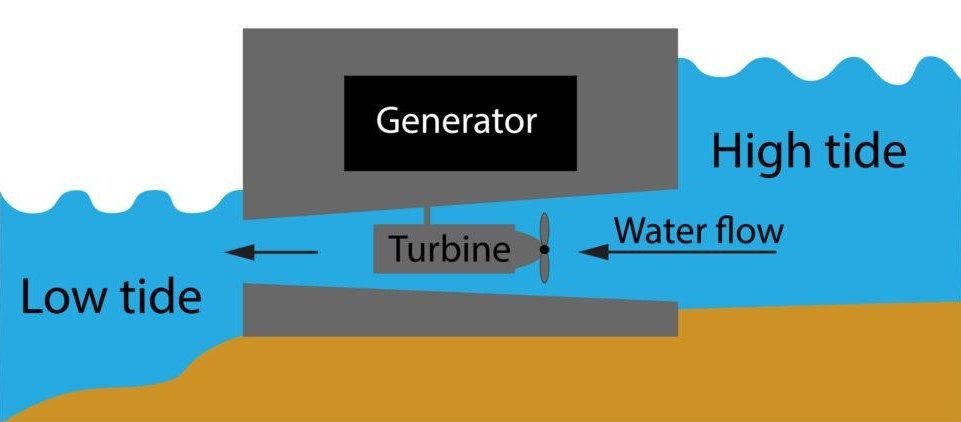
Tidal power: Turbines in sea turn with incoming/outgoing tides. Renewable, predictable. Disadvantage: few suitable sites; affects marine life.
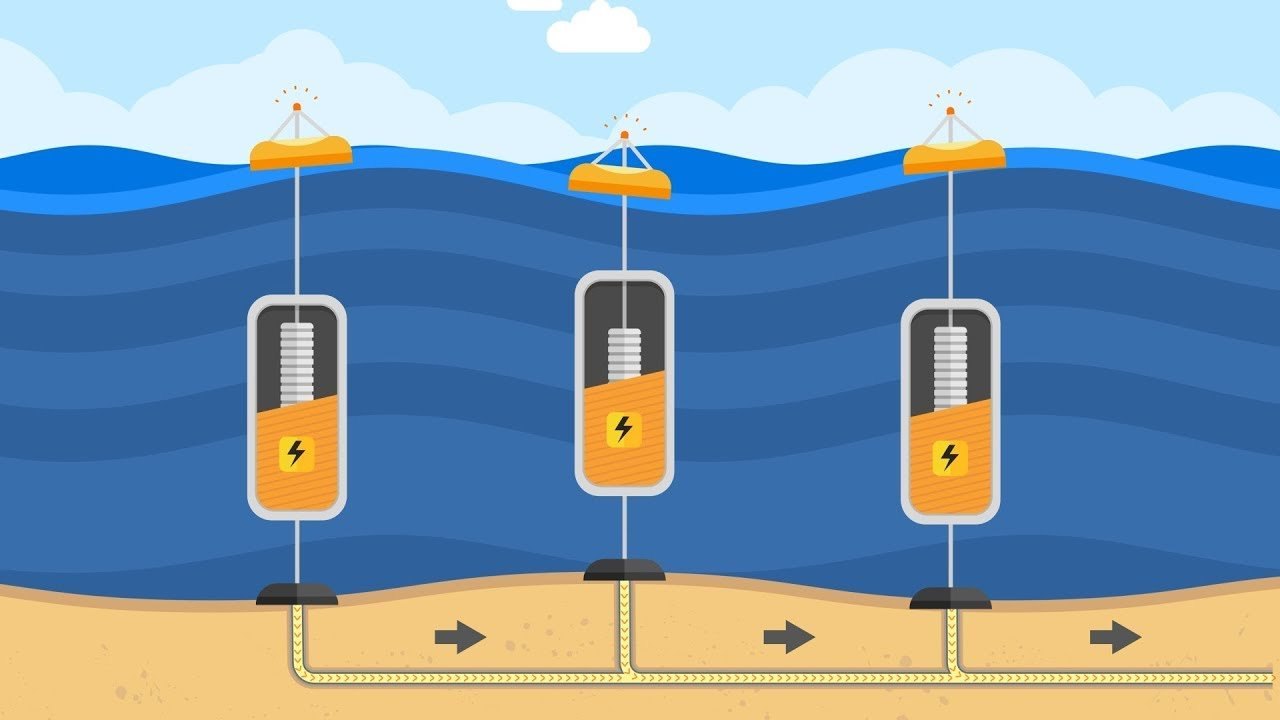
Wave power: Floating devices harness wave motion to drive generators. Renewable. Disadvantage: unreliable, easily damaged by storms.
Biofuels (wood, bioethanol, manure) are produced from living things and are considered renewable.
Biofuels are carbon-neutral in theory (CO2 absorbed growing = CO2 released burning), but in practice still contribute to climate change.
Disadvantage: land used for biofuel crops cannot grow food — a concern where food shortages exist.
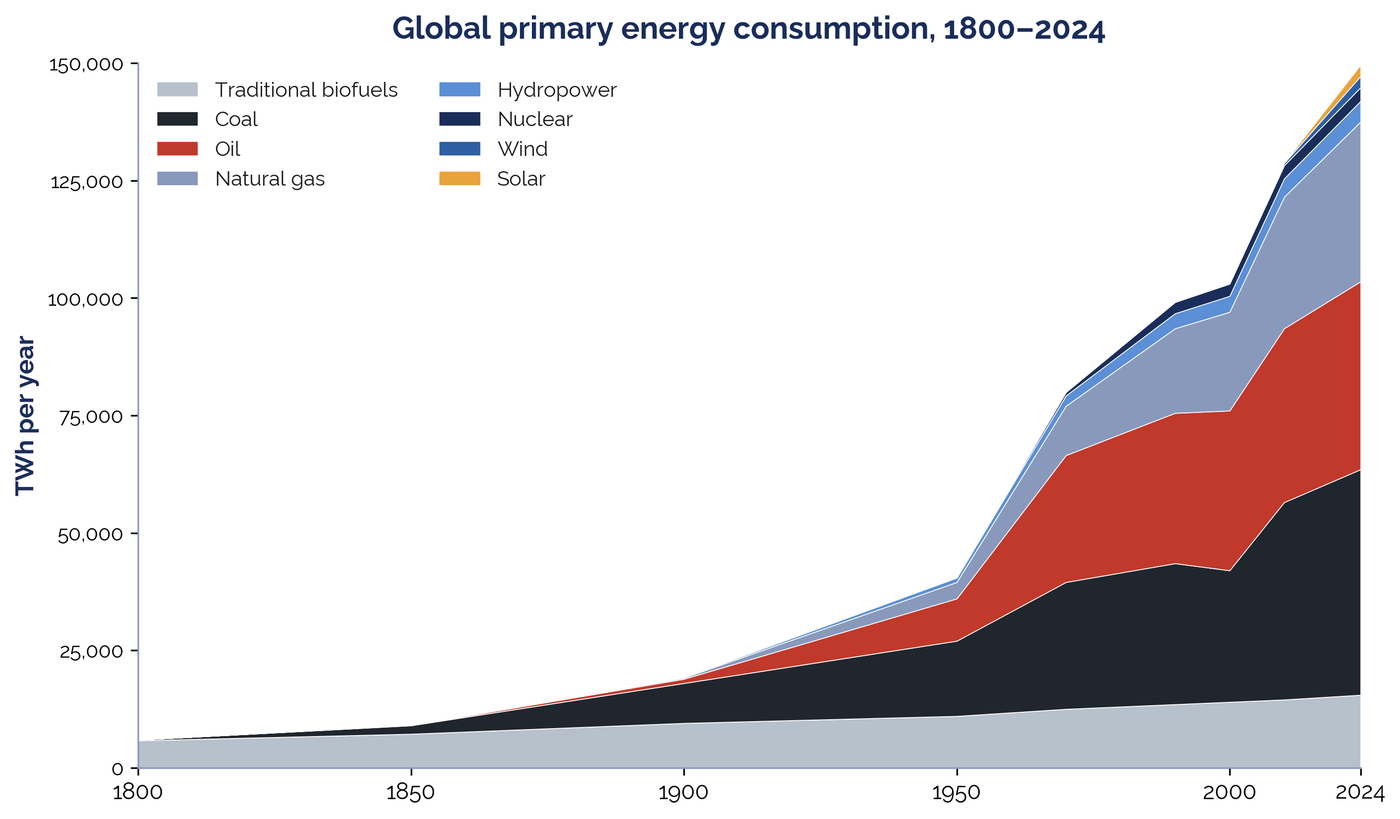
Global primary energy consumption has risen sharply since 1800, driven by industrialisation and population growth.
Renewables are a small but growing fraction; fossil fuels still dominate globally.